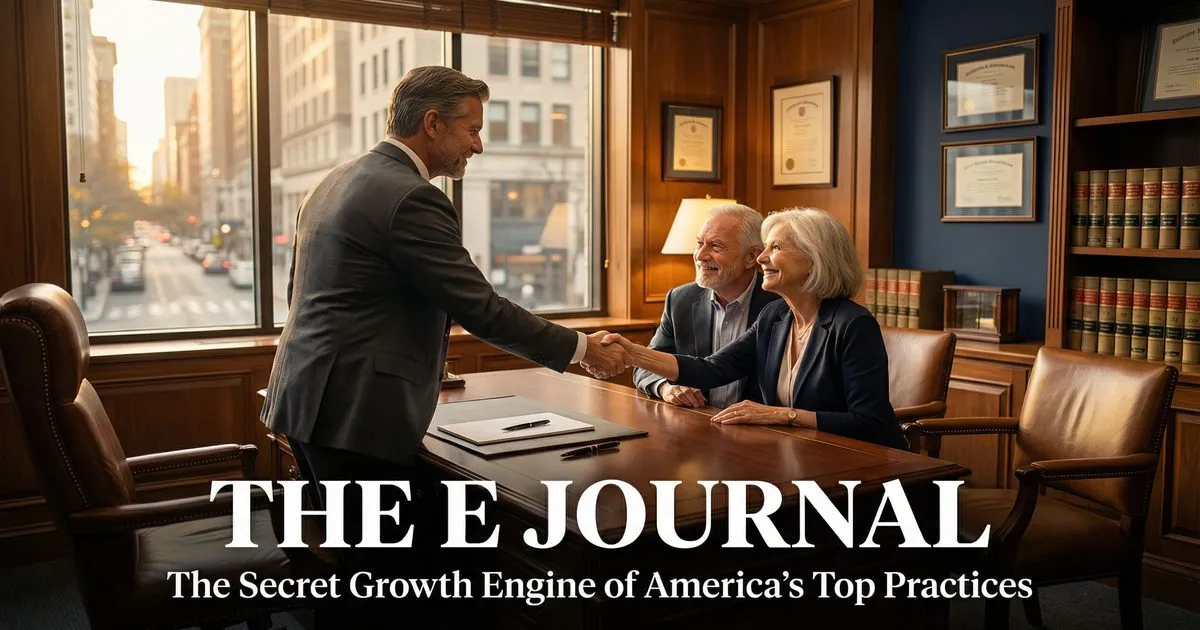
Why the Most Successful Practices in America Never Talk About Their Marketing
Scroll through LinkedIn or attend any professional services conference in 2026, and you will be bombarded by the same message: to grow your practice, you need to master the algorithm. You need better SEO, more aggressive Google Ads, a viral TikTok presence, and a complex funnel to capture leads.
Yet, if you look closely at the most successful, highest-grossing medical, dental, and law practices in America, you will notice something strange. They almost never talk about their marketing. In fact, many of them barely advertise at all.
This isn't because they are coasting on old money or legacy reputations. It is because the top 1% of practices have realized a fundamental truth about professional services: marketing can buy visibility, but only operational excellence can build trust. And in high-stakes industries like healthcare and law, trust is the only currency that scales.
The "Referral Trap" vs. The Referral Engine
There is a common misconception among mid-tier practices that relying on referrals is a passive, outdated strategy. They view word-of-mouth as something that "just happens" when you do good work, making it unpredictable and unscalable. This is what industry experts call the "Referral Trap"—the belief that because you cannot control when a client refers you, you must rely on paid advertising to control your growth.
The most successful practices view referrals entirely differently. They do not see word-of-mouth as a happy accident; they engineer it as a predictable, measurable system.
The data backs up this approach. According to recent studies, approximately 65% of all new business opportunities come from referrals and recommendations . Furthermore, 92% of consumers trust referrals from family and friends over any other form of advertising . When a patient or client comes to a practice via a referral, they arrive pre-sold. They are less price-sensitive, more forgiving of minor inconveniences, and significantly more likely to follow professional advice.
Referred customers also have a 16% higher lifetime value and are 18% more loyal than customers acquired through paid channels . For a high-end dental practice or a boutique law firm, that difference in lifetime value is the margin between a good year and a record-breaking one.
Culture Scales Better Than Campaigns
So, how do these elite practices build a referral engine without spending a fortune on ads? They invest their marketing budget internally.
As noted by Attorney at Work, "Marketing can generate leads; culture sustains performance" . The most successful practices understand that every touchpoint—from the way the phone is answered, to the cleanliness of the waiting room, to the clarity of the billing process—is a marketing event.
When a law firm experiences high turnover or a medical practice has a disorganized front desk, it costs them more than just operational efficiency; it costs them their reputation. A healthy internal culture produces the reliability, professionalism, and empathy that clients remember long after their case is closed or their procedure is finished .
Top practices obsess over the patient or client experience. They implement systems to collect feedback immediately after delivery and identify dissatisfaction early. They train their staff not just on compliance, but on hospitality. They realize that the best marketing strategy in the world cannot fix a broken intake process.
Teach First, Sell Never
Another hallmark of elite practices is their approach to public visibility. When they do engage in outward-facing activities, they rarely "sell." Instead, they teach.
Lawyers and doctors earn trust by explaining complex ideas clearly. Whether it is through publishing articles, hosting community seminars, or producing educational podcasts, they position themselves as contributors to their profession rather than competitors in an attention economy .
This commitment to thought leadership is a long game. The payoff is slower than a targeted Facebook ad campaign, but the credibility it builds endures far longer. When a potential client faces a high-stakes legal issue or a complex medical diagnosis, they do not want the professional who shouted the loudest on a billboard; they want the professional who demonstrated the deepest understanding of their problem.
The Economics of Integrity
Ultimately, the reason the most successful practices don't talk about their marketing is that they have redefined growth around trust rather than lead generation.
Many firms measure growth by the size of their marketing budget. But trust is a more revealing metric for sustainable growth . Trust shows up in client satisfaction, employee retention, ethical reputation, and peer relationships. It cannot be purchased or outsourced; it is earned one interaction at a time.
Returning calls promptly, explaining fees transparently, and preparing thoroughly are mundane acts. But when a practice consistently executes these mundane acts at scale, it builds a level of credibility that advertising simply cannot replicate . Integrity compounds. Each honest interaction becomes a quiet endorsement, creating a brand rooted in trust rather than tactics.
In 2026, the marketplace is noisier than ever. Anyone can buy an ad. But the practices that dominate their markets are the ones that realize the best marketing isn't a campaign you run—it is the standard you operate by every single day.